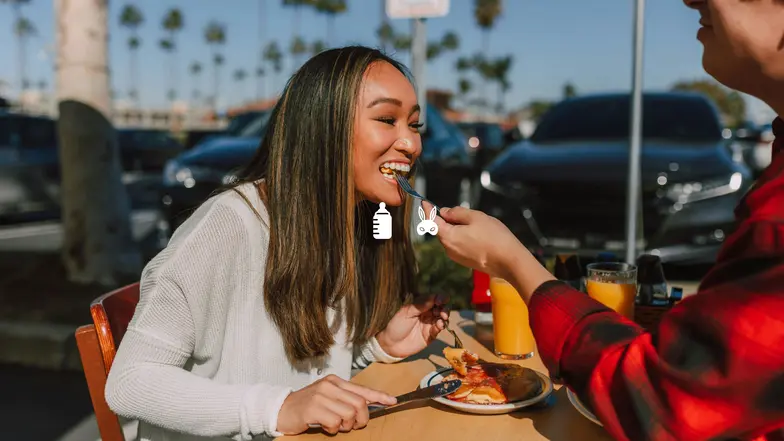
Human sexuality covers a pretty wide range of interests, and feederism is one of those topics that tends to spark curiosity. Maybe you've come across the term online, heard it mentioned in conversation, or stumbled across it while browsing and thought, "Wait, what exactly is that?" If you're looking for a straightforward explanation without the judgment or sensationalism, you're in the right place.
This article breaks down what feederism actually is, how it works between feedees and feeders, why some people are into it, and tackles some of the misconceptions that tend to float around about this particular kink. The reality is usually a lot more nuanced than the stereotypes suggest.
TL;DR:

Feederism (also called feedism or feeding kink) is a sexual interest centered around feeding and eating. In its simplest form, it involves one partner getting pleasure from feeding another person, or someone enjoying being fed by their partner.
There are usually two main roles: the feeder, who gets satisfaction from the act of feeding someone, and the feedee (sometimes called a "gainer"), who enjoys being fed or eating. These aren't rigid categories though-some people like switching roles, and some couples are "mutual gainers" who both enjoy the dynamic together.
Here's the thing: feederism exists on a pretty wide spectrum. For some folks, it's entirely fantasy-something they think about or roleplay without any real-world weight change. For others, it might mean enjoying big, indulgent meals together occasionally. And yes, some people do incorporate actual weight gain into their relationship. There's no single "correct" version of feederism, and what works varies a lot based on what the people involved actually want and feel comfortable with.
Feederism falls under the broader category of fat fetishism, which is attraction to larger bodies. But what makes feederism distinct is the active part-it's about the feeding process, the experience of eating, or potentially the changes that happen over time, not just liking how bigger bodies look.

In practice, feederism relationships work when both people are actually interested and have agreed to participate. This isn't something that just happens or gets sprung on someone-healthy dynamics require both partners to be on board.
What draws people to feederism? It really depends on the person. For feeders, it might be about the nurturing aspect-they love taking care of someone and making sure they're well-fed. Others are drawn to the visual side of things, enjoying how their partner looks or changes. Some find the control element appealing, where they get to influence what and how much their partner eats.
For feedees, the appeal could be the physical sensations-feeling full, enjoying food without guilt, or noticing changes in their body. Others love the emotional side: feeling cared for, getting attention from their partner, or the trust involved in letting someone else take some control. And yes, for some people, there's a submission element where they enjoy giving up control to their partner around eating.
Here's something important to know: feeding doesn't have to be literal. Sure, some couples do the whole preparing meals, encouraging seconds, or even hand-feeding thing. But plenty of others keep it mostly in fantasy territory. They'll talk about weight gain, roleplay scenarios, or focus on the feeling rather than pursuing any major physical changes.
A lot of people into feederism say it's more fantasy than reality for them. They enjoy the idea, the dirty talk, or occasional indulgent moments without making it a lifestyle thing. This gap between fantasy and what people actually do is worth understanding if you really want to get what feederism looks like for most folks.

Let's break down these roles a bit more clearly.
A feeder is someone who gets pleasure from feeding another person. What motivates them varies quite a bit.
Some feeders are all about the caretaking vibe-they genuinely love providing for someone, cooking meals, and making sure their partner is satisfied. For others, it's more visual or physical-they find watching their partner eat, seeing signs of fullness, or noticing physical changes really attractive.
There's also often a control element going on. Some feeders enjoy having influence over what and how much their partner eats, deciding on meals, or encouraging their partner to eat more than they might on their own. This connects to the whole dominance and submission dynamic you see in lots of kinks, though feederism has its own unique flavor.
Worth noting: feeders can be any size themselves. Being a feeder isn't about your own body-it's about the dynamic with your partner and what you find appealing about the feeding experience.
A feedee is someone who enjoys being fed by another person. Their reasons for being into it are just as varied.
Many feedees talk about the physical side-they love feeling full, eating without restrictions, or noticing how their body changes. Others are more into the emotional aspects: feeling taken care of, getting focused attention from their partner, or the intimacy that comes from this kind of interaction.
For some feedees, there's a submission angle. They enjoy giving control over their eating to a partner, being encouraged to eat more, or following their partner's meal decisions. But here's the key: in healthy relationships, the feedee still has ultimate say over their body and choices, even if part of the fun is playing with that surrender feeling.
Being a feedee doesn't automatically mean you want to gain massive amounts of weight. Plenty of feedees are interested in the dynamic itself or only moderate changes while keeping health and being able to move around comfortably as priorities.

This is one of the biggest myths out there-that feederism automatically means gaining tons of weight or wanting to become extremely large. Reality? It's way more varied than that.
There's actually a difference between aspects of feederism that's worth getting. A feeding kink specifically means finding the act of feeding or eating arousing, which might not involve any weight change at all. It could just be about the sensuality of sharing food, watching someone enjoy eating, or the closeness of feeding someone.
Then there's encouragement-talking about eating and weight gain, which can exist purely as fantasy or bedroom talk between partners without any actual action. Lots of people enjoy this as part of their sex life without actually pursuing weight changes.
The gap between fantasy and real life is huge here. Research on feederism communities shows that for many people, extreme scenarios stay firmly in fantasy land. They might enjoy discussing it or roleplaying, but they don't actually pursue it because they care about their health, want to stay mobile, and have practical life considerations.
The variety between relationships is enormous. Some involve zero weight change-it's all about the symbolic act, the connection it creates, or the power dynamic. Others might involve gaining some weight but within ranges everyone's comfortable with. Those extreme situations you see in sensational media? They represent a tiny fraction of how most people actually practice this.

So what's the appeal? There are several psychological and emotional factors at play.
Power dynamics are big for many people. Feeding naturally creates a situation where one person provides and controls, and the other receives. For folks who find power exchange hot, this is perfect territory. It's similar to other dom/sub dynamics but expressed specifically through food.
The caretaking and nurturing angle resonates with some people's sexuality. Feeding someone is fundamentally about caring for them-it's what we do for kids, for people we love, to show hospitality. For some people, this caretaking instinct gets woven into their sexual desires. Being a feeder feels like the ultimate way of caring for someone, while being a feedee feels like being profoundly looked after.
Body positivity and attraction play in too. In a world that often judges larger bodies harshly, feederism creates space where bigger bodies are celebrated and desired. For feedees who are already plus-size, discovering feederism can actually be empowering-finding a community where their body is appreciated. For feeders, it lines up with their genuine attraction in a way that feels more active than just passive admiration.
Trust and emotional intimacy matter here. The vulnerability of eating in front of someone, letting yourself be fed, talking about desires around your body-all of this takes real trust. For some people, that level of intimate connection is a huge part of what makes it appealing.

Like anything sexual, feederism absolutely requires consent from everyone involved.
Informed consent means all partners need to understand what they're agreeing to. This includes talking about what specific activities you're interested in, whether actual weight change is part of the plan, how often you'll engage in feeding stuff, and what the boundaries are. Nobody should feel pressured into this.
Discussing limits and expectations upfront prevents hurt feelings later. Questions to tackle: Is this mostly fantasy or do you want real weight gain involved? If there's weight gain, what's an acceptable range? What happens if someone gets uncomfortable? How does this fit with the rest of your relationship? What's absolutely off the table?
Revisiting boundaries over time is essential because feelings change. Someone might think they're cool with something, then realize through actually experiencing it that they need to adjust. Regular check-ins let both partners share how things are feeling and whether anything needs to change.
And here's the critical part: consent means the feedee always has ultimate control over their body. Even in dynamics that play with control or submission, the feedee needs to be able to say no, slow down, or stop if they're uncomfortable. A feeder who ignores these boundaries has crossed into non-consensual territory, full stop.

Let's tackle some misconceptions head-on.
"It's always unhealthy" oversimplifies things. Feederism exists on a spectrum. Some people practice it without any significant weight change, so no health risks there. Others pursue weight gain but monitor it and manage it. Yes, extreme weight gain carries serious health risks, but that extreme isn't what most people are doing. Many in the community prioritize staying healthy and mobile.
"Feedees have no control" misunderstands the whole thing. In consensual relationships, the feedee has agency over their body and choices. Part of the appeal might be playing with surrender, but healthy relationships have clear boundaries and the feedee can stop anytime. Situations where someone's genuinely coerced or manipulated? Those are abusive situations, not ethical feederism.
"It's only about food" misses all the emotional and psychological layers. Food is the vehicle, but feederism is often more about connection, power exchange, nurturing, or body appreciation. Reducing it to "people who like eating" overlooks the complex motivations involved.
It's also worth saying clearly: feederism isn't inherently abusive. While abuse can happen (as in any relationship), most feederism relationships involve consenting adults who both enjoy the dynamic. Research on these communities shows participants take consent seriously.

The internet has really shaped modern feederism culture.
Forums and discussion spaces give people places to talk openly about this without judgment. These range from general kink forums to dedicated platforms specifically for feederism. People share experiences, ask questions, discuss safety, and connect with others who get it.
There's a big difference between content and real life though. Online you'll find tons of feederism content-stories, images, videos, roleplay-that represents fantasy or extreme examples. This doesn't necessarily reflect what most people actually do. It's like how porn in general often shows exaggerated scenarios. Someone consuming content online might be purely into the fantasy without wanting to practice it in real life.
The gap between fantasy and practice is something the community talks about regularly. Many people are clear that they enjoy extreme scenarios as fantasy but wouldn't actually pursue those outcomes because of health and practical considerations. This ability to separate fantasy from desired reality is something many folks in the community navigate thoughtfully.

Feederism is a sexual kink involving pleasure from feeding someone else or being fed by a partner. There's typically a feeder who enjoys providing food and encouraging eating, and a feedee who enjoys being fed and potentially gaining weight. It exists on a spectrum from pure fantasy to relationships with actual weight gain, with huge variation in how people express it.
In ethical practice, absolutely yes. Both the feeder and feedee need to actively want to participate, understand what they're agreeing to, and feel free to set boundaries or stop anytime. Research shows most participants view consent as essential. However, non-consensual situations can happen, which would be abusive rather than representative of ethical practice.
Nope. Many people keep it primarily as fantasy, dirty talk, or occasional indulgent experiences without pursuing significant physical changes. Some focus on the act of feeding itself, the sensations, or the symbolic aspects rather than transformation. Even among those who do incorporate weight gain, the amount varies enormously based on what people are comfortable with.
It's typically called both a kink and a fetish, with the terms used pretty interchangeably. In psychology, it's sometimes described as a paraphilia, which is the clinical term for unusual sexual interests. Most people in the community just call it a kink-a specific sexual interest that's outside the mainstream but practiced by consenting adults.

Feederism is more complex than headlines or simple explanations suggest. Like many aspects of sexuality, it covers a wide range of practices, from pure fantasy to actively lived dynamics, and the experience varies tremendously between people.
The key things to understand: it requires consent, varies enormously in practice, and isn't accurately represented by extreme scenarios in media. For people who are into it, feederism can be a way to explore power dynamics, express care, celebrate body diversity, or create intimacy through vulnerability.
If you're exploring feederism yourself, approach it with clear communication, firm boundaries, attention to consent, and awareness of both emotional and physical aspects. If you're just trying to understand it, hopefully this gives you a more complete picture than the myths that usually circulate.
Understanding different aspects of sexuality-even ones you might not personally relate to-helps create a more informed and less judgmental view of how diverse human desire actually is. Feederism is one part of that enormous spectrum, practiced consensually by adults who communicate about what they're doing.

 Did You Know We're The Biggest


Sell Now
Create Your Sexy Shop In Under 2 Minutes
Make Money Selling Your Used Items


Buy Now
Find Lovingly Used Panties, Toys & More
Explore Your Kinks With Our Sexy Sellers
Did You Know We're The
Sell Now
Create Your Sexy Shop In Under 2 Minutes
Make Money Selling Your Used Items

Buy Now
Find Lovingly Used Panties, Toys & More
Explore Your Kinks With Our Sexy Sellers


